

From the First Line to First West: A Journey to Designing a Better Future

At 17, Adam Taylor’s ice hockey career promised the stuff of dreams. The right winger was drafted by the National Hockey League’s Carolina Hurricanes, signed a two-year entry-level contract with the Florida Panthers, had a stint in Asia with the China Sharks, and played in the British Elite Hockey League with the Edinburgh Capitals.
But for all the accolades and adventures, injuries mounted: concussions, a bad back, a broken ankle. By his late 20s, Adam was at a crossroads. The NHL eluded him, and his body screamed for rest. The spotlight of a professional hockey player dimmed, replaced by fluorescent rink lights at the Port Moody, British Columbia, community centre rink as he worked as a Zamboni driver and cleaning dressing rooms.
“It was humbling,” recalled Adam. “I went from having people coming to the rink to watch me play, and now I’m cleaning the rink for recreational hockey players.”
But Adam is a competitive athlete at heart. He viewed his new chapter as a challenge, not a defeat. He began setting goals, climbing from rink maintenance to managing municipal facilities. Yet it wasn’t until he joined B.C.’s First West Credit Union as Facilities Manager nearly three years ago that Adam found his true calling: accessibility.
Breaking New Ground
Accessibility has always lingered at the edge of Adam’s life. His mother had hydrocephalus, a chronic neurological condition, as well as fibromyalgia. His father had cancer, which caused mobility issues. Adam recalled that accessibility – or lack thereof – was a constant struggle in his younger years.
“My mom couldn’t go out to many places and, with my dad and going through that fight with him, there were a lot of questions of ‘how do we get to the car?’ ‘Where are we going to park?’ ‘How are we getting into your favourite restaurant?’” said Adam. “It was such a challenge going through that with my parents. And now, it’s such a big thing for me to be able to support accessibility for others.”
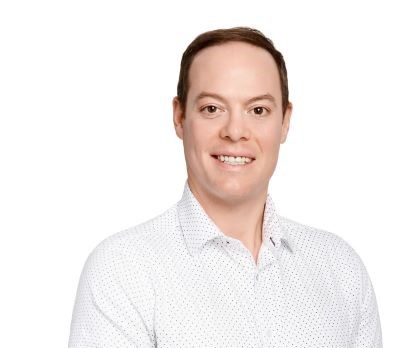
While accessibility was an undercurrent in his life, the idea of creating systemic change didn’t emerge until Adam began working at First West. His personal experiences ignited a passion after attending the Accessibility Professional Network (APN) conference in 2022. The conference, hosted by the Rick Hansen Foundation (RHF), brings together professionals dedicated to improving accessibility in the built environment.
“This is where it all started for me as far as opening my eyes to designing spaces better to accommodate more people,” explained Adam. “Every year I attend, I learn more and more about this space. What stuck out for me at the last APN was when Colleen Baldwin [Vice President, Head of Global Design Strategy and Transformation, Scotiabank] spoke about the procurement process. She said Scotiabank now requires certain accessibility features in place when they lease or renew leases. And First West has started adding that extra lens, asking those questions around commercial real estate.”
A Guiding Hand
The networking component of the APN provided Adam with the right guidance. His first goal was to create a dedicated line item in First West’s operations budget for accessibility improvements, ensuring it wasn’t lumped into miscellaneous expenses. Once that was established, his team began rating First West’s 46 branch locations across British Columbia.
Adam said First West is taking a holistic approach to accessibility: “Instead of putting in a hearing loop at one branch, why don’t we get all our branches RHFAC rated, see what the baseline is, and then set out to improve on that every year?
A highlight of 2024 was winning the Accessibility Progress Award at BOMEX, the annual conference of the Building Owners and Managers Association (BOMA) of Canada, held every September. First West’s regional office in Penticton, B.C., won the award for achieving the largest gain in points over its previous RHF Accessibility Certification (RHFAC) rating, which measures and certifies the level of meaningful access of sites.
“This was a huge honour for First West,” said Adam. “We had the opportunity to pursue this challenge with so many large commercial real estate companies, so it was really interesting to be part of that conversation with people who have bigger budgets and larger teams in this space.”

First West’s executive team had accessibility on its radar for several years, having nine certified buildings through RHFAC in 2019, receiving $25,000 from the RHF BC Accessibility Grants program to help fund the upgrades. While First West didn’t have the staff capacity to keep the ball rolling at the time, before Adam was brought on board, the interest was sparked. A pivotal moment came when Adam invited accessibility advocate Marco Pasqua to speak to First West staff, including senior leaders.
“That’s where the momentum really started,” said Adam. “I was then nudged to apply for the RHFAC Professional designation so I could learn more about accessibility and better guide our projects.”
On Taking RHFAC Training
Adam earned his RHFAC Professional designation in 2023, equipping him to conduct RHFAC ratings and apply Universal Design principles based on maximizing usability by a wide range of users to promote increased access. The training attracts architects, engineers, and those working in construction trades, making Adam initially feeling out of his depth.
“I am a facility manager with a background in refrigeration. So, yes, it was a little nerve-wracking,” he said. “But there was this amazing group of female architects in the class who were all so well-versed, and I learned a lot from them. It was humbling but I gained confidence when I realized my perspective from an operational standpoint provided me with a different – and valuable – point of view.”
Adam credits RHFAC Training with transforming his understanding of accessibility.
“Once you go through this training, you never look at a space the same way again. I think anybody who is working in the built environment should add RHFAC Training to their resume because this area is still so untapped. And, also, from a personal aspect, if you’re passionate about helping people and wanting to see true change, this course really opens your eyes to the possibilities.”
A Journey Not a Finish Line
Workplace culture is a priority at First West, which is the third-largest credit union in B.C. The organization now provides in-house accessibility training annually, keeping the conversation alive.
“If you’re an accessibility advocate like me, every time you go to dinner you check the washroom and you’re looking at the placement of the grab bars. You’re looking at the parking stalls. You’re looking to make sure the entrance is accessible,” he said. “It’s important to keep the momentum going because I don’t want accessibility to be just a buzzword. I want it to be continuous.”
One key learning for staff was that accessibility benefits everyone – not just the 1 in 4 Canadians with disabilities.
“People often think accessibility means having a ramp for someone using a wheelchair, but it’s so much more. It’s for people with hearing and vision loss. Invisible disabilities. Neurodiverse individuals. It could be someone with a broken leg. Even for me – my partner and I just had a child over a year ago, getting access to restaurants or other buildings can be a challenge using a stroller,” he said. “You need to look at accessibility from a Universal Design approach because everybody, at some point in their life, is going to need accessibility. If you’re not, then you’re the luckiest person in the world.”
Reflecting on his journey from the hockey rink to accessibility advocate, Adam is grateful.
“It’s not a big secret that facility management really isn’t very appealing,” he joked. “So, it was a matter of finding my purpose. I love supporting the faculty maintenance part of the job, but getting to do the accessibility aspect is my purpose. It is so fulfilling, and it’s so much bigger than me. It’s about building a world where everyone belongs.”
To learn more about Rick Hansen Foundation Accessibility Certification™ ratings and training, visit RickHansen.com/RHFAC


The opinions and interpretations in this publication are those of the author and do not necessarily reflect those of the Government of Canada.